.jpg)
Q1 results indicate more pain ahead, as slowdown has spread to more sectors, pricing power has come down and rising interest cost is eating into profits.

The earnings are, however, expected to be down around 2 per cent on a sequential basis due to pent-up demand getting exhausted and the adverse impact of rising metals and energy prices on consumer goods and manufacturing companies.

Our focus around technology, cost efficiency, persistency and effective distribution channel will continue, says the ICICI Bank MD and CEO.

Soon, one will be able to pay utility bills at the local supermarket, while buying groceries, with the RBI allowing the setting up of payment banks.
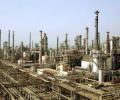
A nearly two-fold hike in natural gas prices will incentivise investment in the hydrocarbon sector and help reduce the energy import bill, India Inc said.

In the early part of 1800, a 30-acre plot next to Fort Gloster on the banks of river Hooghly in Howrah district of Bengal was the nerve centre of industrial activity; it housed India's first steam-powered cotton mill, Bowreah Mills, which was set up by a British merchant and went on to become a hub of factories - a rum distillery, foundry, cotton yarn factory, an oil mill and a paper mill, et al. Spearheaded by Dwarkanath Tagore, the industrialist grandfather of Rabindranath Tagore, the commercial complex was possibly the first of its kind in the country. Close to 200 years later, after much ebb and flow of history, the hub is set for a resurgence of sorts.

The price differential between diesel and petrol has narrowed. But there are still enough reasons to opt for the diesel variant.

Santosh Patkar of Devgadh Taluka Sindhudurg district of Maharashtra is a worried man these days. Devgadh, which is known as the home to world famous Alphonso variety of mangoes, has seen an unusual drop in yields which is affecting farmers' income. Being one of the primary agricultural produce from the area, Santosh is not untouched by this somewhat rare phenomenon. He said in his own mango garden, yields have come down by a third from most trees.

Bharti Airtel called the prices exorbitant while Vodafone Idea wants the auctions take place in 2020. The auctions need to happen when the infrastructure is ready for the roll out, be it in terms of fiberisation levels, or optimisation of equipment and software etc. Spending a hefty amount on a technology (airwaves) that at present offers limited returns is not going to be a priority for the incumbent telcos.
About 50 per cent of the accounts that availed of the EMI moratorium amid the pandemic, which made things worse in an already slowing economy, are expected to be restructured, and of these accounts that would undergo restructuring, one-third, or Rs 6-9 trillion, could turn into NPAs.

As a result of the mass state-led scheme, the processes in the health insurance market could get simplified over time and become uniform

India must be prepared for a big, fat fuel import bill in FY23 - barring any further avatars of the Covid virus - as refiners crank up runs, or crude processing rates, to meet the growing demand for fuels, and crude prices soar. Capacity additions by an Indian state-run refiner will reinforce the need for foreign crude. Demand for all fuels is expected to increase by 3-8 per cent next fiscal from 2021-22, reaching pre-pandemic levels, according to analysts and industry experts.

Big data analytics is an expertise that offers actionable insights and is a confluence of a host of specialisations, including mathematics, science and social sciences.

While companies have not launched too many products in rural areas of late, easy financing has helped push up demand.

Overall, the credit profiles of players will be supported by healthy balance sheets and liquidity. Prudence in capital and development expenditure, efficient working-capital management, and recent equity raising will help sustain credit metrics in FY22.

In spite of a severe second wave of the coronavirus pandemic, and a widespread disruption in public life therefore, India's fast-moving consumer goods (FMGC) sector seems to have emerged as one of the most resilient segments of the economy. The early numbers and estimates for the April-June quarter indicate a steady recovery in FMCG players' business, which is now set to exceed the pre-pandemic level. Amid nationwide lockdowns because of the first Covid wave, FMCG revenues had been severely affected in mid-2020.

To propel demand, one should concentrate on indirect taxes and bring down the goods and services tax (GST) rates to a uniform 12 per cent as the Vijay Kelkar panel had recommended, said Ajit Ranade, chief economist at Aditya Birla Group.
Clearly, the domestic market has taken sharp knocks in April, which is likely to be visible in May as well, said analysts tracking the market, as FMCG companies are grappling with improving capacity utilisation and dealing with labour shortage.

The earlier ambiguity over bifurcation of the state had affected the real estate business.

Indian auto industry's dependence on China is high and it will continue to be so in the BS-VI era and as the country moves towards electric mobility. Domestic players lack both technological competence and the sheer pricing advantage that support Chinese imports.

Experts said the new framework has ensured that the focus has moved to creditor protection from debtor protection.

Lenders can now initiate recovery proceedings since the SC has lifted the standstill on asset classification, which protected stressed accounts from slipping into NPAs.

'If an investor wants to clone an ace investor's portfolio, s/he will be better off cloning the entire portfolio rather than cherry picking stocks selectively.'

Industrialists affirm their belief that the adverse effects of demonetisation and the goods and services tax are finally over.

The country's narrowing power deficit and increased coal production may not be indicators of the end of stress in the industry. Amritha Pillay reports.

Such cold-shoulder by banks also indicates a credit freeze that is hard to overcome, unless the government comes out with credit guarantee schemes for loans given by banks. Since that is not happening, and there is no indication of that too, banks are not willing to listen to RBI prodding.

A fourth of the property market is cash-based and this has affected home sales after high value notes were scrapped.

Terming the RBI action on Wednesday as a "pleasant surprise", analysts today cautioned that possibility of a rate hike in the future cannot be ruled out. Urijit Patel committee's report on monetary policy would clear the air on RBI's future stand, they added.

Quite a few large- and mid-cap stocks are yet to recover from the note ban, pharma, banking and rural demand-based industries among laggards.

Decades of a state-owned monopoly selling coal at a fixed price has taken its toll on production.

How did marquee Dalal Street investors fare in the Jan-Mar quarter that saw the BSE Sensex tank 10 per cent?

Tendering the shares in an open offer will lead to higher taxation.

In any case, Ghosh could take lessons from the best professionally managed companies all over the world that always groom the CEO successors well in advance.

Sun Pharma stock has appreciated at 35% a year for 20 years

Indian companies struggle to escape debt burden as profit slows.

Govt reconstitutes body, says will not interfere in senior PSB appointments

'The main reason people go to other countries is unemployment in Punjab'

The IMD attributed the projection to a weakening of El Nio and the Indian Ocean Dipole turning positive.

HFCs and banks expect a drop in demand for housing loans in the short-term.

By splitting its business into separate verticals with dedicated portfolio heads, CavinKare looks to improve distribution and facilitate more launches in the future
 © 2026 Rediff.com - Advertise with us - Disclaimer - Privacy Policy - Sitemap - Feedback - About us - Terms of use - Grievances